- Published 05 Jun, 2026
- Updated 05 Jun, 2026
- read
- karoline_hc
- Reviewed by: karolinehc
- Editor: karolinehc
Categories: Colombia Data Storytelling Election Analysis
Tags: Data Visualization Abelardo de la Espriella Centro Democrático Colombia Elections 2026 Electoral College Paradox Iván Cepeda Castro Pacto Histórico Political Polarization Popular Vote Presidential Election Registraduría Nacional Territorial Vote Two Colombias
The Two Colombias: A Nation Divided by Geography Presidential Elections in Colombia First Round on May 31, 2026, Part 1
The content presented in this article is intended solely for academic purposes. The opinions expressed are based on my personal understanding and research. It’s important to note that the field of big data and the programming languages discussed, such as Python, R, Power BI, Tableau, and SQL, are dynamic and constantly evolving. This article aims to foster learning, exploration, and discussion within the field rather than provide definitive answers. Reader discretion is advised.
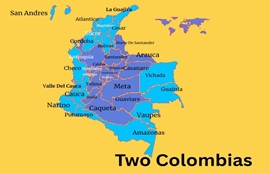
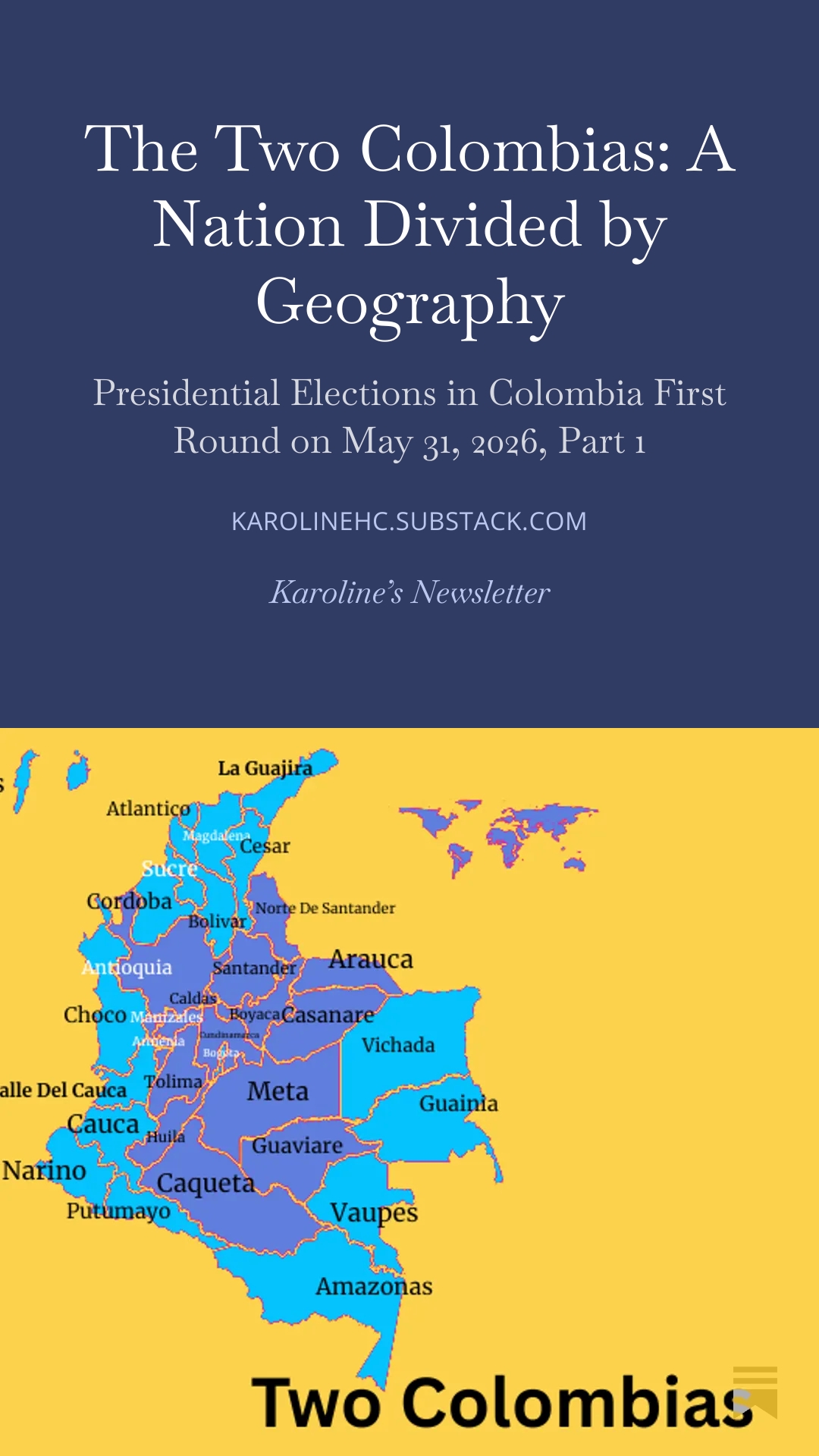
Abelardo De La Espriella won the popular vote by nearly 700,000 votes. But look at the map, and Ivan Cepeda appears to have won more of Colombia. How is this possible? As you can see on the Map Colombia did not just vote for two candidates. It voted as two countries: a coastal, progressive Colombia that backed Cepeda, and an Andean, conservative Colombia that backed Abelardo. On the Visual: Map colored by winner (blue =Abelardo, vivid azure = Cepeda). Key data points: Cepeda’s Colombia: Pacific coast + Caribbean + Amazon + Bogota Abelardo’s Colombia: Andean interior + Llanos + Border region Cepeda Won the Map. But Abelardo Won the vote
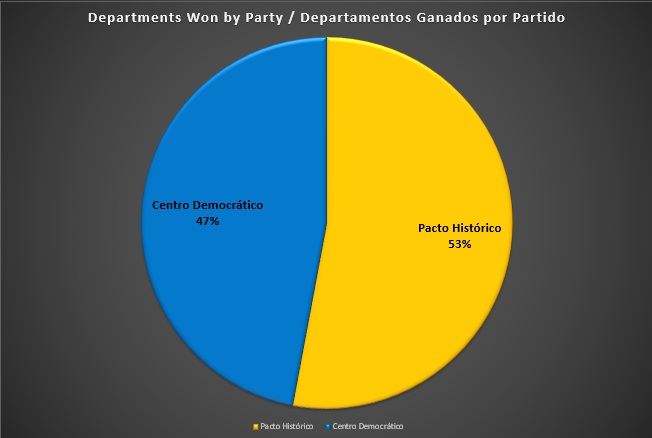
This pie chart also helps us to understand that Colombia’s presidential first round, Ivan Cepeda’s Pacto Historico won 18 of 34 departments (53%) a geographic majority. While Abelardo de la Espriella’s Centro Democratico won 16 departments (47%). However somehow this does not count, votes do. Despite winning more territory, Cepeda trails in the popular vote (9.69M vs. 10.36M). His victories came in Colombia’s smallest, most remote departments. Abelardo won the population giants Antioquia, Cundinamarca, Santander by wider margins. This is Colombia’s “Electoral College paradox”: territorial dominance without popular victory. What it means for the runoff: Cepeda must turn out more voters in his coastal and Amazonian Strongholds. Abelardo must defend his Andean base. The 5 swing departments Caldas, Quindio, Risaralda (Coffee Zone) , San Andres, Vichada will decide. The territorial vote reveals an almost perfect split just 177,000 votes separate the two candidates across all departments
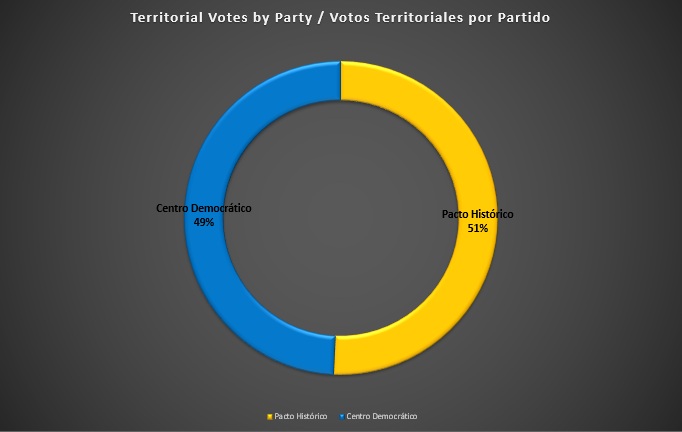
Add up the winner’s votes in every department, and Colombia’s division becomes undeniable: The “Pacto Historico (Cepeda)” party got 6,249,693 territorial votes, share 51% VS “The Centro Democratico (Abelardo)” party got 6,072,138 territorial votes, share 49% just 177,000 votes separate them. That’s rounding error in a nation of 41 million eligible voters. This chart does not show total national votes. It shows the votes accumulated by the winner in each department. Cepeda’s 18 depatments produced slightly more winning votes than Abelardo’s 16. But remember: Abelardo leads the popular vote (10.36M vs 9.69M). The bigger picture Departments won by Cepeda 53% VS Abelardo 47% as result a gap of 6% now about Territorial winner votes by Cepeda 51% VS Abelardo 49% as a result a gap of 2% so National popular vote by Cepeda 40.9% VS Abelardo 43.7% as a result a gap of -2.8%. The more you zoom in, the closer it gets and then it flips. But that’s only half the story, see you soon, dear readers!! Data: Registraduria Nacional June 02, 2026
Frequently Asked Questions
Who won the popular vote in Colombia's 2026 first round?
Abelardo de la Espriella (Centro Democrático) won the popular vote with 10.36 million votes (43.74%). Iván Cepeda Castro (Pacto Histórico) received 9.69 million votes (40.90%). The margin was approximately 673,000 votes.
How many departments did each candidate win?
Iván Cepeda won 18 of 34 departments (53%) — a geographic majority. Abelardo de la Espriella won 16 departments (47%). Despite winning fewer territories, Abelardo won the popular vote.
What is the Electoral College paradox in this election?
The Electoral College paradox occurs when a candidate wins more territories (departments/states) but loses the popular vote. In Colombia, Cepeda won more departments but Abelardo won more total votes — because Abelardo’s victories came in heavily populated regions like Antioquia, Cundinamarca, and Santander.
What does 'territorial votes' mean in this analysis?
Territorial votes refer to the votes accumulated ONLY by the winner in each department. It does NOT include votes for losing candidates. Cepeda’s 18 departments produced 6.25 million winner votes (51%), while Abelardo’s 16 departments produced 6.07 million (49%).
Which departments will decide the runoff election?
The 5 swing departments most likely to decide the runoff are: Caldas, Quindío, Risaralda (the Coffee Zone), San Andrés, and Vichada. These were won by narrow margins and could flip in the second round.
What are 'The Two Colombias' in this election?
The Two Colombias refers to the geographic political divide: a coastal, progressive Colombia (Pacific coast, Caribbean, Amazon, and Bogotá) that backed Cepeda, and an Andean, conservative Colombia (interior highlands, Llanos, and border regions) that backed Abelardo.
Why didn't Cepeda win despite winning more departments?
Cepeda’s victories came predominantly in Colombia’s smallest, most remote departments with low population density. Abelardo won the population giants — Antioquia (3.2M voters), Cundinamarca (1.6M), and Santander (1.2M) — by wider margins. In a popular vote system, population weight matters more than territory count.
What is the difference between popular vote and territorial vote?
The popular vote is the TOTAL votes each candidate received nationwide. The territorial vote counts only the WINNER’S votes in each department. Abelardo leads the popular vote (10.36M vs 9.69M), but the territorial vote was nearly tied (51% vs 49%).
What happens next in Colombia's 2026 presidential election?
Since no candidate reached 50%+1 of the votes, Colombia will hold a runoff election (segunda vuelta/balotaje) between the top two candidates: Abelardo de la Espriella and Iván Cepeda Castro. The winner of the runoff becomes president.
When was this election data retrieved?
Data was retrieved on June 2, 2026, approximately 48 hours after polls closed. The Registraduría Nacional completed final verification on June 4, 2026. Minor differences may exist between these numbers and the final certified results — typically adjustments affecting less than 0.1% of total votes.